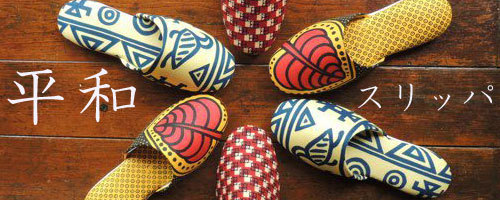
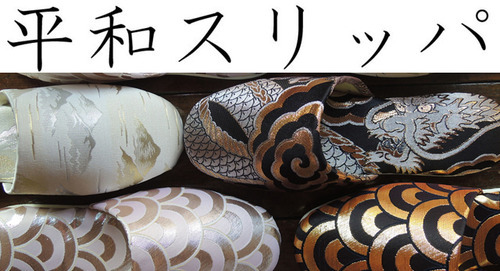
What is Heiwa Slipper?
In the beginning, Japanese slippers
Thank you for visiting our website. We are an online slipper store located in Japan and very excited to introduce you our various collections of the slippers.
But first, let me explain what we call “slipper” in Japan. Most of the time, in Western countries, “slipper” means “a semi-closed type of shoe, consisting of a sole held to the wearer’s foot by a strap running over (or between) the toes or instep (Reference: Wikipedia)”. They are wearable shoes for outside, most of the time, and sometimes inside as well for comfort. On the other hand, in Japan, when we say “slipper”, we think flat, in-house footwear item, and that is the kind we would like to spread to the world.
As you may know, it is our common practice to take our shoes off when we go in the house to keep the floor clean. Then why do we wear slippers in the house? How did the slipper become so common in Japan?
How did the slipper become so common in Japan?
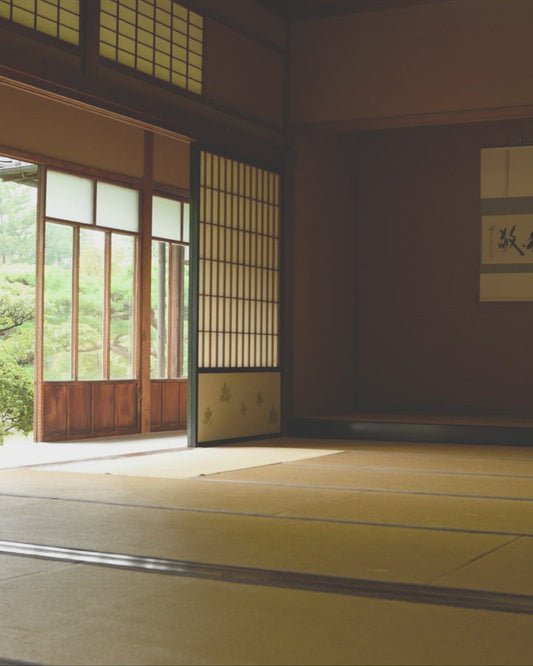
It is said that the origin of slipper firstly appeared in Japan in the beginning of Meiji era (1968-1912), which was the time Japan was opening its country to the world and having more people visited from outside, especially from Western countries. However, those visitors of course walked straight into the houses or hotel rooms without taking their shoes off. Japanese people worried that the floor would eventually get dirty and the tatami would be damaged. Slipper was devised to deal with those problems and to welcome people who came from different cultural background.
Our theme is “Return of Japanese Slippers”
Ever since then, slipper has become common/daily use item all over Japan. However, unfortunately, we barely find slippers made in Japan these days. A lot of them are industrially mass-produced in other countries at lower wages, and sold at a cheap price here. Our theme is “Return of Japanese Slippers”.
We believe slipper can be a bridge to the peace (= “Heiwa”)
Here, we will introduce slippers made with the spirits of Japanese hospitality. We would like to also introduce some slippers made in other countries, in which we try our best to achieve the fair-trade upon importing them. “Benefits for all three sides, for the customer, society, and the vendor” is what we are aiming for.
We believe slipper can be a bridge to the peace (= “Heiwa”).
- Heiwa Slipper



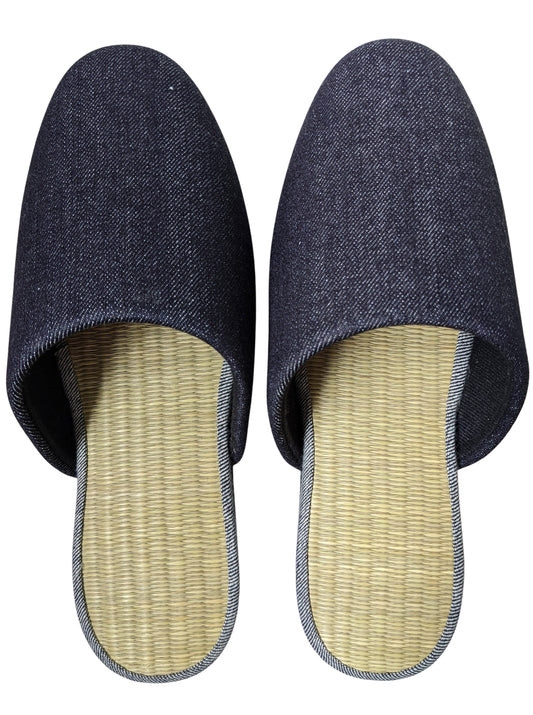


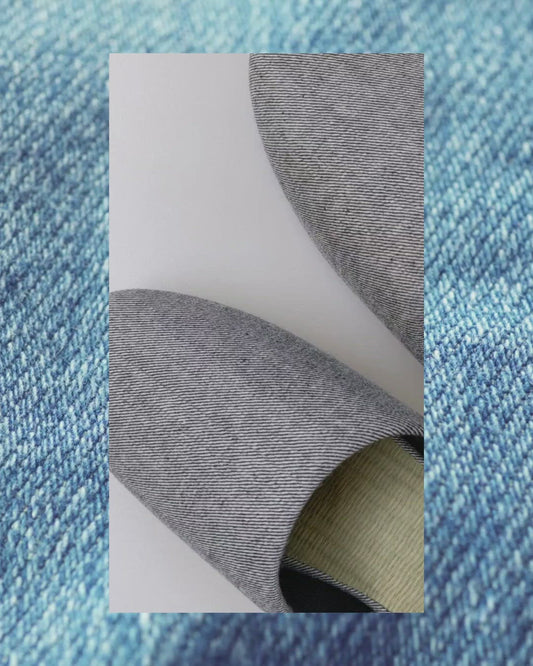
![TATAMI Denim Slippers B-Type [Black Wool Felt Sole] / Simple [Denim Hiroshima] - Heiwa Slipper](http://heiwaslipper.com/cdn/shop/products/PXL_20220625_014342749.jpg?v=1656474603&width=533)


![Wood summer Indoor slippers YORU [Indoor] - Heiwa Slipper](http://heiwaslipper.com/cdn/shop/products/PXL_20220305_023859778_b6eb97cf-5b3f-4cb3-8b27-dc6175a726a3.jpg?v=1676772560&width=533)
![Wood summer Indoor slippers YORU [Indoor] - Heiwa Slipper](http://heiwaslipper.com/cdn/shop/products/221dbc310353bfdfe8747210eafe6a96_9611d4d2-ef9b-4b06-b357-9f4f825470c8.jpg?v=1676772560&width=533)
![Wood Unpainted Natural GETA ZOURI Slippers [Outdoor] - Heiwa Slipper](http://heiwaslipper.com/cdn/shop/products/PXL_20230205_021218589.jpg?v=1675997531&width=533)
![木製 未上漆 自然色 GETA ZOURI 拖鞋 [Outdo或]](http://heiwaslipper.com/cdn/shop/products/4bd6786738cd4777af9a25d3005e7fec.thumbnail.0000000000.jpg?v=1675736665&width=533)
![Black Wood painted GETA Slippers [Outdoor / Indoor] - Heiwa Slipper](http://heiwaslipper.com/cdn/shop/products/PXL_20230205_014733671.jpg?v=1676343138&width=533)
![黑色 木製 上漆 GETA 拖鞋 [Outdo或 / 室內]](http://heiwaslipper.com/cdn/shop/products/6743267dad824b0787df8618829f743d.thumbnail.0000000000.jpg?v=1676341291&width=533)
![Uwabaki Type #01 [Cobalt blue] Japan made school indoor shoes - Heiwa Slipper](http://heiwaslipper.com/cdn/shop/files/1_774e840e-b3c1-4a23-b85f-df7b8ceacf02.jpg?v=1734232769&width=533)
![Uwabaki Type #01 [Cobalt blue] Japan made school indoor shoes - Heiwa Slipper](http://heiwaslipper.com/cdn/shop/files/2_e1a26258-95fd-461d-a07c-a2028b8334c0.jpg?v=1734232769&width=533)
![Uwabaki Type #01 [Blue] Japan made school indoor shoes - Heiwa Slipper](http://heiwaslipper.com/cdn/shop/files/1_b6310388-146d-4db8-8fc6-9efea05e5cdd.jpg?v=1730601209&width=533)
![Uwabaki 類型 #01 [藍色] 日本 made school 室內 shoes](http://heiwaslipper.com/cdn/shop/files/preview_images/00ddc0ebe039486ba930ba1484c6abff.thumbnail.0000000000.jpg?v=1730601987&width=533)

![Uwabaki 類型 #01 [白色] 日本 made school 室內 shoes](http://heiwaslipper.com/cdn/shop/files/preview_images/8b07db1bea8544409ca9b26f3995178f.thumbnail.0000000000.jpg?v=1716774889&width=533)
![Uwabaki Type #01 [Red] Japan made school indoor shoes - Heiwa Slipper](http://heiwaslipper.com/cdn/shop/files/1_b6a613f3-7a33-4747-b00f-9af7dd1dce5f.jpg?v=1734234054&width=533)
![Uwabaki Type #01 [Red] Japan made school indoor shoes - Heiwa Slipper](http://heiwaslipper.com/cdn/shop/files/2_d39644c6-6955-4644-98c4-0b1fde3d6db2.jpg?v=1734234054&width=533)
![Black Gold Triangle Shiny Slippers [Large / XL] - Heiwa Slipper](http://heiwaslipper.com/cdn/shop/products/PXL_20220911_020329137.jpg?v=1668920339&width=533)
![Black Gold Triangle Shiny Slippers [Large / XL] - Heiwa Slipper](http://heiwaslipper.com/cdn/shop/products/PXL_20220911_020348548.jpg?v=1668920313&width=533)
![Medium | 針織 升級再造 拖鞋 2024-M120 [Medium]](http://heiwaslipper.com/cdn/shop/files/1_74e6bb20-9457-4005-b920-1da4aa2fc0d3.jpg?v=1731672250&width=533)
![Medium | 針織 升級再造 拖鞋 2024-M120 [Medium]](http://heiwaslipper.com/cdn/shop/files/4_787e681d-8081-496a-bc25-b24dab67d34f.jpg?v=1731672250&width=533)
![Medium | 針織 升級再造 拖鞋 2024-M119 [Medium]](http://heiwaslipper.com/cdn/shop/files/1_f559f61a-b720-4b6c-9379-974266bdddeb.jpg?v=1731671453&width=533)
![Medium | 針織 升級再造 拖鞋 2024-M119 [Medium]](http://heiwaslipper.com/cdn/shop/files/5_c7010731-884e-4374-a501-69bce7f7164a.jpg?v=1731671453&width=533)
![Medium | 針織 升級再造 拖鞋 2024-M118 [Medium]](http://heiwaslipper.com/cdn/shop/files/1_4f7f701e-bcb4-469a-b9bc-7cfbec1bf50f.jpg?v=1731670790&width=533)
![Medium | 針織 升級再造 拖鞋 2024-M118 [Medium]](http://heiwaslipper.com/cdn/shop/files/4_5526ef4a-899c-4a92-843e-bd5022a7b922.jpg?v=1731670789&width=533)
![Medium | 針織 升級再造 拖鞋 2024-M117 [Medium]](http://heiwaslipper.com/cdn/shop/files/1_da150a42-c6f5-4fc7-95cc-696990456578.jpg?v=1731669514&width=533)
![Medium | 針織 升級再造 拖鞋 2024-M117 [Medium]](http://heiwaslipper.com/cdn/shop/files/4_c8f22448-bb97-4d00-909b-713256757b57.jpg?v=1731669513&width=533)
![Medium | Knit up-cycle slippers 2024-M116 [Medium] - Heiwa Slipper](http://heiwaslipper.com/cdn/shop/files/1_77365f74-aab6-4356-9b7f-90ba42d47f4e.jpg?v=1731668957&width=533)
![Medium | Knit up-cycle slippers 2024-M116 [Medium] - Heiwa Slipper](http://heiwaslipper.com/cdn/shop/files/5_d910f8da-39c2-4f8f-83f2-f67a4efd89ad.jpg?v=1731668957&width=533)
![Medium | 針織 升級再造 拖鞋 2024-M115 [Medium]](http://heiwaslipper.com/cdn/shop/files/1_22b912db-7a3b-4e60-9efa-290d27cbf2de.jpg?v=1731642622&width=533)
![Medium | 針織 升級再造 拖鞋 2024-M115 [Medium]](http://heiwaslipper.com/cdn/shop/files/2_59ac7cff-bc23-425e-8ad6-2753017e34b9.jpg?v=1731642622&width=533)
![Medium | 針織 升級再造 拖鞋 2024-M114 [Medium]](http://heiwaslipper.com/cdn/shop/files/1_23cd6836-0c59-41e8-b11e-5f1b9a9e1db4.jpg?v=1731641964&width=533)
![Medium | 針織 升級再造 拖鞋 2024-M114 [Medium]](http://heiwaslipper.com/cdn/shop/files/5_63997f3b-9e8b-406d-a486-361737300d21.jpg?v=1731641963&width=533)
![Medium | 針織 升級再造 拖鞋 2024-M113 [Medium]](http://heiwaslipper.com/cdn/shop/files/1_a377de3c-c6f5-4868-bf59-1ad164dd6c67.jpg?v=1731641270&width=533)
![Medium | 針織 升級再造 拖鞋 2024-M113 [Medium]](http://heiwaslipper.com/cdn/shop/files/4_b70af802-9ca5-43bb-8036-d5e8141d55c1.jpg?v=1731641270&width=533)
![Medium | 針織 升級再造 拖鞋 2024-M112 [Medium]](http://heiwaslipper.com/cdn/shop/files/1_2b43d953-aa8c-49ca-9f11-f88334b75ed5.jpg?v=1731639427&width=533)
![Medium | 針織 升級再造 拖鞋 2024-M112 [Medium]](http://heiwaslipper.com/cdn/shop/files/4_c6a2d9e1-8c7a-4060-9950-17817b75ac96.jpg?v=1731639427&width=533)
![Medium | 針織 升級再造 拖鞋 2024-M111 [Medium]](http://heiwaslipper.com/cdn/shop/files/1_99a9047c-a2fd-4843-84d3-2225abfca327.jpg?v=1731638613&width=533)
![Medium | 針織 升級再造 拖鞋 2024-M111 [Medium]](http://heiwaslipper.com/cdn/shop/files/2_47aebdf4-72c8-417e-b084-11ecb43fb627.jpg?v=1731638613&width=533)
![Medium | 針織 升級再造 拖鞋 2024-M110 [Medium]](http://heiwaslipper.com/cdn/shop/files/1_5ce71ce4-d1e1-4e4b-926e-965373d6f956.jpg?v=1731587890&width=533)
![Medium | 針織 升級再造 拖鞋 2024-M110 [Medium]](http://heiwaslipper.com/cdn/shop/files/4_83216e03-5cbf-4018-be81-db22572f752a.jpg?v=1731587890&width=533)
![Medium | 針織 升級再造 拖鞋 2024-M109 [Medium]](http://heiwaslipper.com/cdn/shop/files/1_39fbaa6d-d89d-4252-ba57-4ab08c97e18b.jpg?v=1731587213&width=533)
![Medium | 針織 升級再造 拖鞋 2024-M109 [Medium]](http://heiwaslipper.com/cdn/shop/files/4_69c82117-f469-413e-a9e1-b65ee9be909a.jpg?v=1731587212&width=533)
![Uwabaki Type #01 [Yellow] Japan made school indoor shoes - Heiwa Slipper](http://heiwaslipper.com/cdn/shop/files/PXL_20231203_013919940_2cb6643e-3792-4570-a478-48e9292dd66e.jpg?v=1716433566&width=533)
![Uwabaki Type #01 [Yellow] Japan made school indoor shoes - Heiwa Slipper](http://heiwaslipper.com/cdn/shop/files/PXL_20231203_013924997_6ec89008-e83d-49be-a754-189a4394f3d7.jpg?v=1716433310&width=533)
![Uwabaki 類型 #01 [綠色] 日本 made school 室內 shoes](http://heiwaslipper.com/cdn/shop/files/1_0e97bd6f-50fa-4892-865f-d3a8de9c6c47.jpg?v=1730601600&width=533)
![Uwabaki 類型 #01 [綠色] 日本 made school 室內 shoes](http://heiwaslipper.com/cdn/shop/files/preview_images/a0e1cab212ce428ea71baffd633ef028.thumbnail.0000000000.jpg?v=1730602087&width=533)