Jak dbać o japońskie kapcie Heiwa Slipper – praktyczne sposoby na świeżość | Heiwa Slipper
Niestety, nasze kapcie nie są przeznaczone do prania.
Dokładniej mówiąc – nie zalecamy prania ich w wodzie.

Używamy specjalnych tkanin, dlatego mogą wystąpić silne przebarwienia oraz blaknięcie kolorów po kontakcie z wodą.
Dodatkowo podeszwy filcowe mogą się odkształcić, co powoduje, że kapcie tracą swój kształt i stają się niewygodne.
Dlatego nie zalecamy prania naszych kapci w wodzie.
Rozumiemy jednak, że wiele osób martwi się o nieprzyjemny zapach. Oto kilka sprawdzonych sposobów, jak dbać o kapcie, które nie nadają się do prania:

1) Suszenie na słońcu ☀️
W ciepłe, słoneczne dni pozostaw kapcie do wyschnięcia na słońcu. Nieprzyjemny zapach często wynika z wilgoci i potu – promienie UV pomagają w naturalnej dezynfekcji. Uwaga: długotrwałe wystawienie na silne słońce może powodować blaknięcie kolorów.
2) Przecieranie wilgotną ściereczką 🧽
Delikatnie przetrzyj powierzchnię kapci wilgotną ściereczką. Unikaj nadmiernego moczenia tkaniny.
3) Dezynfekcja sprayem lub etanolem 🌿
Możesz użyć dostępnych w Polsce sprayów odświeżających do tkanin lub etanolu używanego do dezynfekcji rąk. Ten sposób jest skuteczny, ale pamiętaj, aby:
- przestrzegać lokalnych przepisów,
- unikać otwartego ognia – etanol jest łatwopalny,
- sprawdzić, czy nie masz alergii na używane środki.
4) Noszenie skarpet 🧦
Noszenie kapci na bose stopy powoduje szybsze powstawanie zapachów. W Japonii wiele osób używa różnych rodzajów kapci – osobnych do chodzenia boso i osobnych do noszenia ze skarpetkami.
Jeśli chcesz chodzić boso, polecamy bardziej przewiewne modele, takie jak kapcie z tatami lub kapcie z otwartym przodem.
Dodatkowe wskazówki
Osobiście zdarzyło mi się prać nasze kapcie w pralce, ale robiłem to na własne ryzyko. Jeśli zdecydujesz się na pranie, użyj siatki ochronnej i trybu delikatnego prania ręcznego. Efekt? Kapcie były czystsze, ale:
- kolory lekko wyblakły,
- kształt został trochę zdeformowany,
- klej na spodzie lekko się odkleił.


Jeśli pierzesz ręcznie, delikatnie i bez intensywnego wirowania, kapcie mogą mniej się odkształcać – ale nadal nie zalecamy tego rozwiązania.
Zależy nam, aby nasze porady były dla Ciebie jak najbardziej pomocne i praktyczne. Dziękujemy, że wybrałeś Heiwa Slipper! 🇯🇵
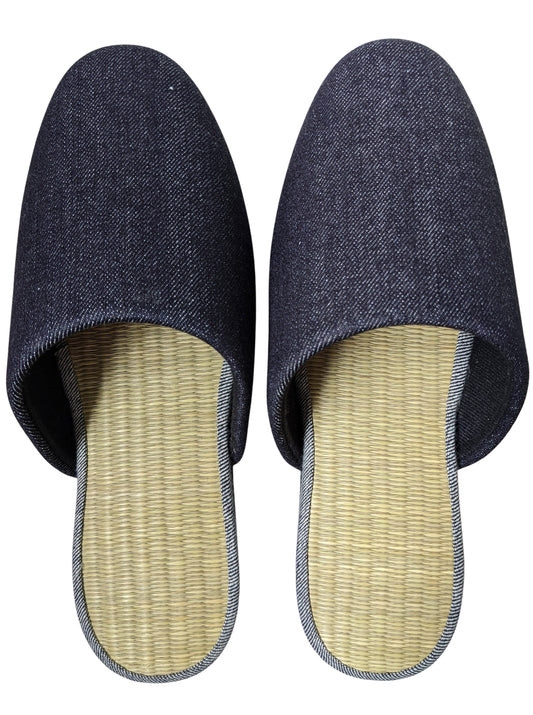


![TATAMI Denim Slippers B-Type [Black Wool Felt Sole] / Simple [Denim Hiroshima] - Heiwa Slipper](http://heiwaslipper.com/cdn/shop/products/PXL_20220625_014342749.jpg?v=1656474603&width=533)


![Wood summer Indoor slippers YORU [Indoor] - Heiwa Slipper](http://heiwaslipper.com/cdn/shop/products/PXL_20220305_023859778_b6eb97cf-5b3f-4cb3-8b27-dc6175a726a3.jpg?v=1676772560&width=533)
![Wood summer Indoor slippers YORU [Indoor] - Heiwa Slipper](http://heiwaslipper.com/cdn/shop/products/221dbc310353bfdfe8747210eafe6a96_9611d4d2-ef9b-4b06-b357-9f4f825470c8.jpg?v=1676772560&width=533)
![Wood Unpainted Natural GETA ZOURI Slippers [Outdoor] - Heiwa Slipper](http://heiwaslipper.com/cdn/shop/products/PXL_20230205_021218589.jpg?v=1675997531&width=533)
![木製 未上漆 自然色 GETA ZOURI 拖鞋 [Outdo或]](http://heiwaslipper.com/cdn/shop/products/4bd6786738cd4777af9a25d3005e7fec.thumbnail.0000000000.jpg?v=1675736665&width=533)
![Black Wood painted GETA Slippers [Outdoor / Indoor] - Heiwa Slipper](http://heiwaslipper.com/cdn/shop/products/PXL_20230205_014733671.jpg?v=1676343138&width=533)
![黑色 木製 上漆 GETA 拖鞋 [Outdo或 / 室內]](http://heiwaslipper.com/cdn/shop/products/6743267dad824b0787df8618829f743d.thumbnail.0000000000.jpg?v=1676341291&width=533)
![Uwabaki Type #01 [Cobalt blue] Japan made school indoor shoes - Heiwa Slipper](http://heiwaslipper.com/cdn/shop/files/1_774e840e-b3c1-4a23-b85f-df7b8ceacf02.jpg?v=1734232769&width=533)
![Uwabaki Type #01 [Cobalt blue] Japan made school indoor shoes - Heiwa Slipper](http://heiwaslipper.com/cdn/shop/files/2_e1a26258-95fd-461d-a07c-a2028b8334c0.jpg?v=1734232769&width=533)
![Uwabaki Type #01 [Blue] Japan made school indoor shoes - Heiwa Slipper](http://heiwaslipper.com/cdn/shop/files/1_b6310388-146d-4db8-8fc6-9efea05e5cdd.jpg?v=1730601209&width=533)
![Uwabaki 類型 #01 [藍色] 日本 made school 室內 shoes](http://heiwaslipper.com/cdn/shop/files/preview_images/00ddc0ebe039486ba930ba1484c6abff.thumbnail.0000000000.jpg?v=1730601987&width=533)
![Uwabaki Type #01 [Red] Japan made school indoor shoes - Heiwa Slipper](http://heiwaslipper.com/cdn/shop/files/1_b6a613f3-7a33-4747-b00f-9af7dd1dce5f.jpg?v=1734234054&width=533)
![Uwabaki Type #01 [Red] Japan made school indoor shoes - Heiwa Slipper](http://heiwaslipper.com/cdn/shop/files/2_d39644c6-6955-4644-98c4-0b1fde3d6db2.jpg?v=1734234054&width=533)

![Uwabaki 類型 #01 [白色] 日本 made school 室內 shoes](http://heiwaslipper.com/cdn/shop/files/preview_images/8b07db1bea8544409ca9b26f3995178f.thumbnail.0000000000.jpg?v=1716774889&width=533)
![Black Gold Triangle Shiny Slippers [Large / XL] - Heiwa Slipper](http://heiwaslipper.com/cdn/shop/products/PXL_20220911_020329137.jpg?v=1668920339&width=533)
![Black Gold Triangle Shiny Slippers [Large / XL] - Heiwa Slipper](http://heiwaslipper.com/cdn/shop/products/PXL_20220911_020348548.jpg?v=1668920313&width=533)
![Medium | 針織 升級再造 拖鞋 2024-M120 [Medium]](http://heiwaslipper.com/cdn/shop/files/1_74e6bb20-9457-4005-b920-1da4aa2fc0d3.jpg?v=1731672250&width=533)
![Medium | 針織 升級再造 拖鞋 2024-M120 [Medium]](http://heiwaslipper.com/cdn/shop/files/4_787e681d-8081-496a-bc25-b24dab67d34f.jpg?v=1731672250&width=533)
![Medium | 針織 升級再造 拖鞋 2024-M119 [Medium]](http://heiwaslipper.com/cdn/shop/files/1_f559f61a-b720-4b6c-9379-974266bdddeb.jpg?v=1731671453&width=533)
![Medium | 針織 升級再造 拖鞋 2024-M119 [Medium]](http://heiwaslipper.com/cdn/shop/files/5_c7010731-884e-4374-a501-69bce7f7164a.jpg?v=1731671453&width=533)
![Medium | 針織 升級再造 拖鞋 2024-M118 [Medium]](http://heiwaslipper.com/cdn/shop/files/1_4f7f701e-bcb4-469a-b9bc-7cfbec1bf50f.jpg?v=1731670790&width=533)
![Medium | 針織 升級再造 拖鞋 2024-M118 [Medium]](http://heiwaslipper.com/cdn/shop/files/4_5526ef4a-899c-4a92-843e-bd5022a7b922.jpg?v=1731670789&width=533)
![Medium | 針織 升級再造 拖鞋 2024-M117 [Medium]](http://heiwaslipper.com/cdn/shop/files/1_da150a42-c6f5-4fc7-95cc-696990456578.jpg?v=1731669514&width=533)
![Medium | 針織 升級再造 拖鞋 2024-M117 [Medium]](http://heiwaslipper.com/cdn/shop/files/4_c8f22448-bb97-4d00-909b-713256757b57.jpg?v=1731669513&width=533)
![Medium | Knit up-cycle slippers 2024-M116 [Medium] - Heiwa Slipper](http://heiwaslipper.com/cdn/shop/files/1_77365f74-aab6-4356-9b7f-90ba42d47f4e.jpg?v=1731668957&width=533)
![Medium | Knit up-cycle slippers 2024-M116 [Medium] - Heiwa Slipper](http://heiwaslipper.com/cdn/shop/files/5_d910f8da-39c2-4f8f-83f2-f67a4efd89ad.jpg?v=1731668957&width=533)
![Medium | 針織 升級再造 拖鞋 2024-M115 [Medium]](http://heiwaslipper.com/cdn/shop/files/1_22b912db-7a3b-4e60-9efa-290d27cbf2de.jpg?v=1731642622&width=533)
![Medium | 針織 升級再造 拖鞋 2024-M115 [Medium]](http://heiwaslipper.com/cdn/shop/files/2_59ac7cff-bc23-425e-8ad6-2753017e34b9.jpg?v=1731642622&width=533)
![Medium | 針織 升級再造 拖鞋 2024-M114 [Medium]](http://heiwaslipper.com/cdn/shop/files/1_23cd6836-0c59-41e8-b11e-5f1b9a9e1db4.jpg?v=1731641964&width=533)
![Medium | 針織 升級再造 拖鞋 2024-M114 [Medium]](http://heiwaslipper.com/cdn/shop/files/5_63997f3b-9e8b-406d-a486-361737300d21.jpg?v=1731641963&width=533)
![Medium | 針織 升級再造 拖鞋 2024-M113 [Medium]](http://heiwaslipper.com/cdn/shop/files/1_a377de3c-c6f5-4868-bf59-1ad164dd6c67.jpg?v=1731641270&width=533)
![Medium | 針織 升級再造 拖鞋 2024-M113 [Medium]](http://heiwaslipper.com/cdn/shop/files/4_b70af802-9ca5-43bb-8036-d5e8141d55c1.jpg?v=1731641270&width=533)
![Medium | 針織 升級再造 拖鞋 2024-M112 [Medium]](http://heiwaslipper.com/cdn/shop/files/1_2b43d953-aa8c-49ca-9f11-f88334b75ed5.jpg?v=1731639427&width=533)
![Medium | 針織 升級再造 拖鞋 2024-M112 [Medium]](http://heiwaslipper.com/cdn/shop/files/4_c6a2d9e1-8c7a-4060-9950-17817b75ac96.jpg?v=1731639427&width=533)
![Medium | 針織 升級再造 拖鞋 2024-M111 [Medium]](http://heiwaslipper.com/cdn/shop/files/1_99a9047c-a2fd-4843-84d3-2225abfca327.jpg?v=1731638613&width=533)
![Medium | 針織 升級再造 拖鞋 2024-M111 [Medium]](http://heiwaslipper.com/cdn/shop/files/2_47aebdf4-72c8-417e-b084-11ecb43fb627.jpg?v=1731638613&width=533)
![Medium | 針織 升級再造 拖鞋 2024-M110 [Medium]](http://heiwaslipper.com/cdn/shop/files/1_5ce71ce4-d1e1-4e4b-926e-965373d6f956.jpg?v=1731587890&width=533)
![Medium | 針織 升級再造 拖鞋 2024-M110 [Medium]](http://heiwaslipper.com/cdn/shop/files/4_83216e03-5cbf-4018-be81-db22572f752a.jpg?v=1731587890&width=533)
![Medium | 針織 升級再造 拖鞋 2024-M109 [Medium]](http://heiwaslipper.com/cdn/shop/files/1_39fbaa6d-d89d-4252-ba57-4ab08c97e18b.jpg?v=1731587213&width=533)
![Medium | 針織 升級再造 拖鞋 2024-M109 [Medium]](http://heiwaslipper.com/cdn/shop/files/4_69c82117-f469-413e-a9e1-b65ee9be909a.jpg?v=1731587212&width=533)
![Uwabaki Type #01 [Yellow] Japan made school indoor shoes - Heiwa Slipper](http://heiwaslipper.com/cdn/shop/files/PXL_20231203_013919940_2cb6643e-3792-4570-a478-48e9292dd66e.jpg?v=1716433566&width=533)
![Uwabaki Type #01 [Yellow] Japan made school indoor shoes - Heiwa Slipper](http://heiwaslipper.com/cdn/shop/files/PXL_20231203_013924997_6ec89008-e83d-49be-a754-189a4394f3d7.jpg?v=1716433310&width=533)
![Uwabaki 類型 #01 [綠色] 日本 made school 室內 shoes](http://heiwaslipper.com/cdn/shop/files/1_0e97bd6f-50fa-4892-865f-d3a8de9c6c47.jpg?v=1730601600&width=533)
![Uwabaki 類型 #01 [綠色] 日本 made school 室內 shoes](http://heiwaslipper.com/cdn/shop/files/preview_images/a0e1cab212ce428ea71baffd633ef028.thumbnail.0000000000.jpg?v=1730602087&width=533)